|
|
KiwiBerries.com Hardy Kiwi aka: KiwiBerries
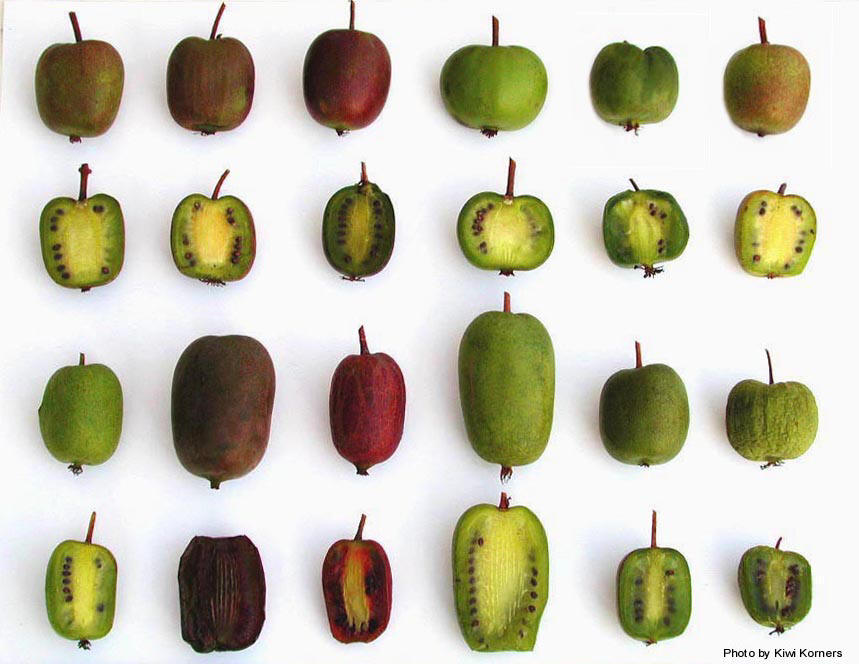
Kiwi Berries is the trademark name, first used by us in commerce in 1998, that we chose for the hardy kiwi fruit that we produce. We now have a new trade name for all of our organic products, including our fresh fruit, which is Kiwi Berry Organics. Hardy kiwi "actinidia arguta" originated in the temperate areas of China, Japan, Russia, and Korea and arrived in the United States on Clipper Ships in the 1800's. Hardy kiwi is a vigorous vine which can be cultivated in cool, temperate regions. In our area, the vines flower in June and are harvested from late September through mid-October. These vines produce a fruit that we call Kiwi Berries - the "no fuzz", "no peel" cousin of the traditional kiwifruit. Sweeter and more flavorful, each variety has its own color, size, and tropical taste. Their smooth skin allows you to pop them into your mouth and eat them like grapes. They are perfect for snacks, a healthy addition to a lunch box, or add them to your favorite recipes. Presently, there are less than 200 acres of commercially grown hardy kiwi (A. arguta) on the planet. Pioneering, passion, perseverance, and pride are the cornerstones of our organic farm, Kiwi Korners, located in Northeastern Pennsylvania where we have researched, developed and grown (multi-cultivar) hardy kiwi vines for the past twenty years. Kiwi Berries is the trademark name, first used by us in commerce in 1998, that we chose for the hardy kiwi fruit that we produce. This year we have unveiled a new trade name for all of our organic products, including our fresh fruit, which is Kiwi Berry Organics. What makes our Kiwi Berries differ from other hardy kiwi on the market ("Baby", "Grape", or "Cocktail") is variety, taste, and nutrition. There are two schools of thought for trellis support, the T-bar system and the overhead pergola. We have chosen a modified, extended T-bar trellis system. Vines are planted in raised beds, approximately 4 feet in width, to aid in both drainage and root development. We find the T-bar advantageous for vine growth characteristics, ease of pruning, and effective for harvest making fruit readily available. The pergola system only permits a minimum amount of air and light, whereas the T-bar system allows fruit to receive air flow and maximum continuous sunlight from day one, achieved by pruning three times throughout the season, which increases fruit size, color, and sugars. Our method produces a sweeter, tastier berry with a higher nutritional value. Our fruit is "certified organic" and we don't use anything other than natural food and soil amendments for our vines. The fruit is also hand-picked at the peak of maturity allowing the fruit to assimilate the natural sugars from the vine. The fruit continues to ripen after it has been harvested, and reaches sugar levels (Brix) from 18 to 32. We do not use ethylene gas to promote the ripening of our fruit. We are currently marketing two of the outstanding varieties from the fifty cultivars in our original test trials. One of these are only grown and marketed by Kiwi Korners. Our "signature" fruit, the "Passion Popper" is unmatched in its varietal qualities of taste and nutrition. Kiwi Berries are HIGHLY NUTRITIOUS & RICH IN ANTIOXIDANTS with an outrageous TROPICAL TASTE ! Please see the "Kiwi Nutrition" page for more specific information. Kiwi Berries should be allowed to ripen at room temperature. Their skin will begin to turn darker green, and the berries will yield to gentle pressure. Refrigerate softened fruit for best storage life, and let it return to room temperature when using it for the best flavor. Please see the "Ripening and Eating" page for a visual image, and additional information.
|